This book is not for the faint hearted. We have sectarian violence, poverty, rape, grooming, an alcoholic and uncaring mother, dysfunctional sibling relationships, drugs, crime and inequality. All taking place under the key themes of adolescent realising of homosexuality.
Many times, the book is a masterpiece. I felt completely within the story at moments, longing to do my bit to help Mungo, willing him on to take a different path, or for somebody else to do something more for him.
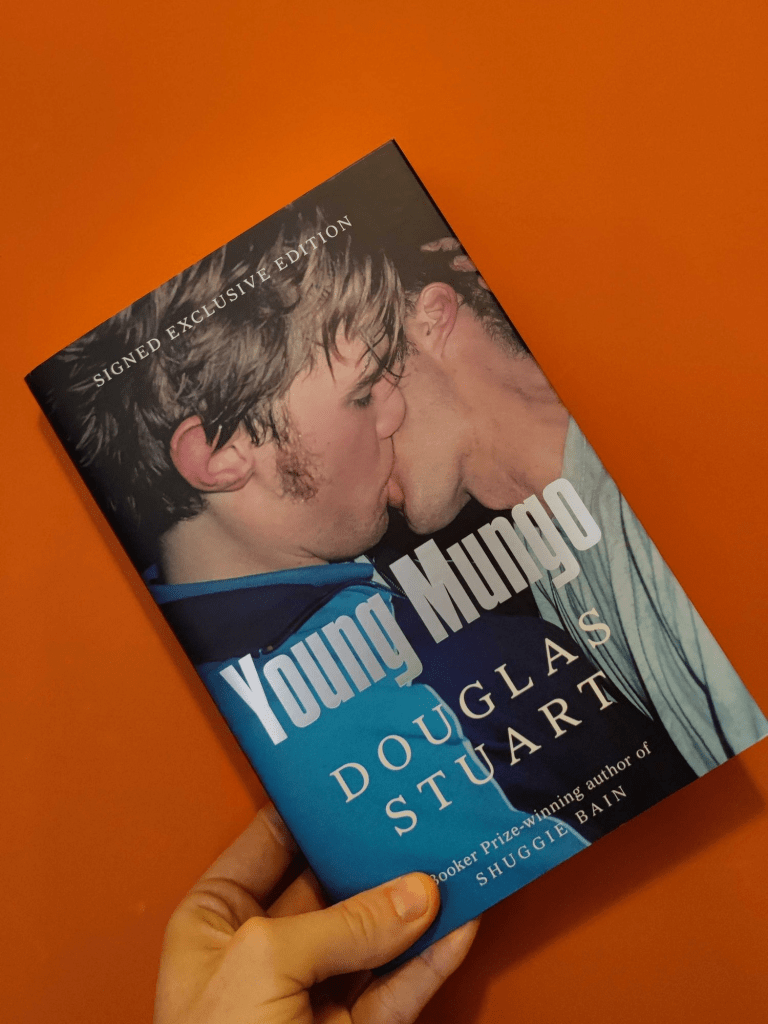
The parts of the book where Mungo and James spend together are comfortably my favourite. There is beautiful and poetic writing throughout these moments.
“It was good to put your weight on someone else, even if it was just for a short while.”
I longed for more of this, and for Mungo’s feelings about James. At times, this wasn’t possible. The structure of the book – in media Res – means that we see some of the events take place early on and then we need to wait until later to find out how and why. While this works very well in some places, it leaves Stuart unable to spend a lot of the time of the fishing tip allowing Mungo to reflect on James, because some of that plot hasn’t been revealed yet.
The negatives: my main issue with the book is that I think it falls into a trap of refusing LGBTQ+ characters the right to be happy. Upon reading a few chapters, it felt inevitable that Mungo was going to be raped. When Hamish gave him the knife, it was merely a question of when, and whether Mungo would die at his happiest moment or commit murder.
These things are not inevitable. The author has agency. Just as Mungo and James have their moment of happiness and liberation, it is the author’s choice to inflict pain and suffering upon them. We had enough of this in the actual 1990s in popular culture’s articulation of gay life. We don’t need it retrospectively repeated now.
Even at the end, sexuality is explored in a set of lazy stereotypes by a father who gives Mungo a lift. I merely spent the chapter praying that he wouldn’t rape Mungo too. I don’t know what it was trying to do.
My other issue with it is the point of view. Some of Stuart’s descriptive writing is beautiful and powerful, but at times it’s not only wasteful and unnecessary, it’s unhelpful and distracting too. We’re told repeatedly that Mungo has limitations of thought and expression, yet again and again words are spent describing character traits, deep thoughts of other characters and dynamics of relationships. It repeatedly felt like the author instead of Mungo that was setting out the story.
At times, that gets quite confusing as it’s really unclear whether we’re reading Mungo’s perspective, Jodie’s perspective, the mother’s perspective, or some omniscient narrator. Various paragraphs lose focus, and I longed for him to just get to the point.
So, at times I loved it. At times it floored me. At times I hated it. At times, I sighed at a predictable plot and turn of events which I’d hoped we’d moved past.
 lgbtq+ WRITING
Leave a comment