A very different topic for me today, but I wanted to write about it.
I’ve been obsessed recently with George Harrison. A few years ago, I stumbled across the Concert for George that took place a short while after he died in 2001 and I’ve listened to it most weeks ever since.
It then got me looking back into his old material. I went last-to-first (because why not) and listened to the posthumously released Brainwashed album, which was worked on by George’s son Dhani and Jeff Lynne after Harrison died. Quite fitting, given that during the Free As A Bird/Now And Then recordings, he later commented on the project:
“I hope somebody does this to all my crap demos when I’m dead, make them into hit songs.“
George Harrison, taken from Huntley (2006).
And then I started to go all the way back to the Traveling Wilburys and then eventually back even further. And I stumbled across his 1974 tour of North America. I knew he didn’t tour much at all post-Beatles and as I knew nothing of the tour, I started to look into it in more detail. So I watched a few old scratchy videos, read up on it, and jotted a few thoughts down below.
The tour generated a lot of anticipation at the time, and ultimately a mix of acclaim and controversy/criticism. The tour was not just a series of gigs, but an effort by Harrison to carve out his own style of musical contribution after the Beatles.
The tour spanned from November 2 to December 20, 1974, covering 26 concerts across 18 cities in the United States and Canada. It was launched to promote Harrison’s “Dark Horse” album and his new record label, also named Dark Horse. The lineup featured a blend of Harrison’s solo work, reworkings of Beatles songs both by Harrison and by Lennon and McCartney, and segments dedicated to Indian classical music, reflecting Harrison’s deep-rooted respect for its spirituality.
However, the tour was met with several challenges. Harrison’s voice was notably strained, a casualty of rigorous rehearsals and possibly exacerbated by his lifestyle at the time. This vocal issue affected the quality of his performances, leading to mixed critical receptions.
The tour was also hampered by an intense schedule. Sometimes they would play twice in one day, and the show was a lengthy one.
The show was long, and often we would do two shows the same day. That was a very long day. Then we’d go to the airport, up on a private plane and on to the next city. There was no hanging out on the road. Basically people were sleeping, sound checking, eating, playing and then traveling.
Robben Ford, speaking in 2013.
Part of this long show was down to the inclusion of a lengthy Indian music segment led by Ravi Shankar, a bold artistic choice that, while innovative, proved divisive among audiences expecting a more conventional rock concert.
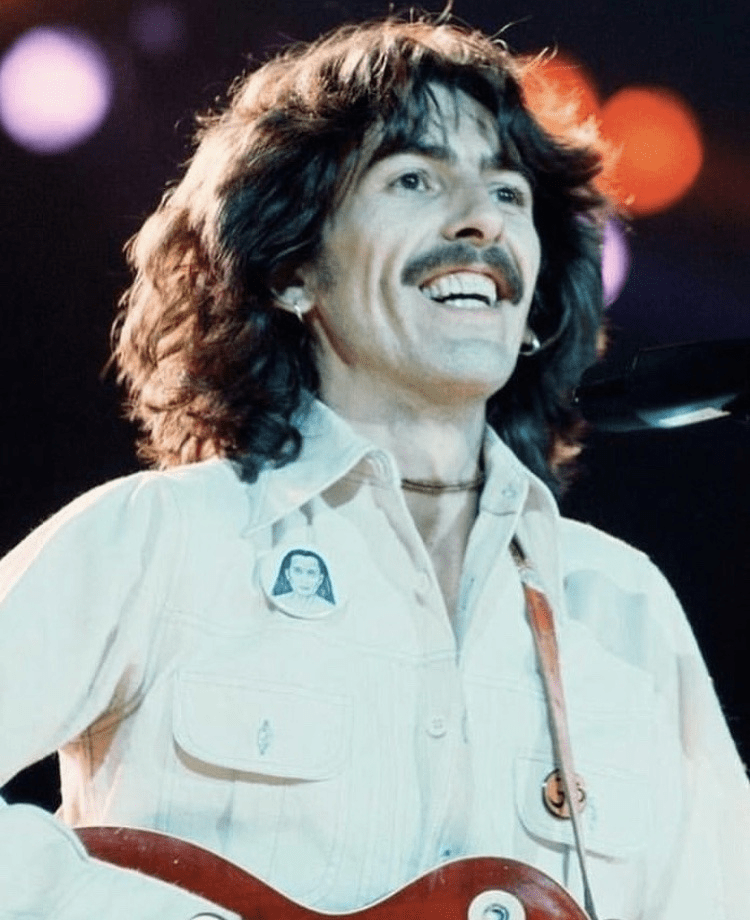
The critical reception was mixed. Some appreciated the tour’s ambitious scope and the fusion of Western rock with Eastern musical traditions, recognizing it as a pioneering effort to broaden the musical horizons of American audiences.
Others, however, were less forgiving, focusing on Harrison’s vocal struggles and commenting that the setlist was self-indulgent. The Beatles songs included were quite heavily reworked – including a very different version of In My Life with a pretty fundamental lyric change from I love you more to I love God more – while even his own Beatles songs had lyrics or structures changed. The tour’s ambitiousness was its double-edged sword, offering a unique musical experience but also quite arrogantly alienating part of its audience.
Despite these challenges, the tour holds a significant place in musical memory. If you listen to recordings from the tour, you’ll see firstly that the recordings are quite unfortunately low quality bootlegs, but that the audience appears to be having a really great time.
Indeed in retrospect, the 1974 North American tour has gained a more sympathetic understanding among critics and fans alike. What was once viewed as a series of missteps is now often seen as a courageous artistic endeavour (albeit not universally). The tour embodied Harrison’s differences as a solo artist —his profound spirituality, his musical curiosity, and his ability to write some beautiful songs. I’m personally of the view that Harrison’s solo output is far better than any of the other Beatles post-band work.
Today, the tour seems to be viewed with a nice mix of perspectives. On the one hand, it was an effort to do something genuinely different. On the other, it was a bit naively put together and a bit of a flop. Harrison himself said:
I either finish this tour ecstatically happy… or I’ll just end up going back to my cave for another five years.
George Harrison, 1974
When I got off the plane [after the 1974 tour], and back home, I went into the garden… I couldn’t even go into the house. I was a bit wound up – then, when I came in, I looked in the mirror and decided: Oh, I’m not that bad after all.
George Harrison, 1980
It was something different. On a number of levels, it didn’t work, but on some of the most important (to Harrison and those around him) it did. And most importantly to me: it’s a pretty decent listen!
I’m off to listen to some of it again.
 lgbtq+ WRITING
Leave a comment